Home › Get Involved › Blood, Organ and Body Donation
Blood, Organ and Body Donation
रक्तदान · अवयवदान · देहदान
Three ways to give that cost nothing but a decision.
What this initiative does
A unit of blood, a pair of corneas, a body given to a medical college — each one changes a life the donor will never meet. The Foundation organises blood donation camps with licensed blood banks, helps people pledge their organs on the Government of India portal, and guides families through body donation to a government medical college.
We are clear about our role. The Foundation is a facilitator. We do not collect blood, remove organs or receive bodies ourselves. Every one of those acts is carried out only by a licensed blood bank, a registered transplant hospital or the Anatomy Department of a recognised medical college, under government rules.
Organ donation gives a person a life. Body donation makes a doctor. अवयवदानामुळे माणसाला आयुष्य मिळते, तर देहदानामुळे डॉक्टर घडतात.
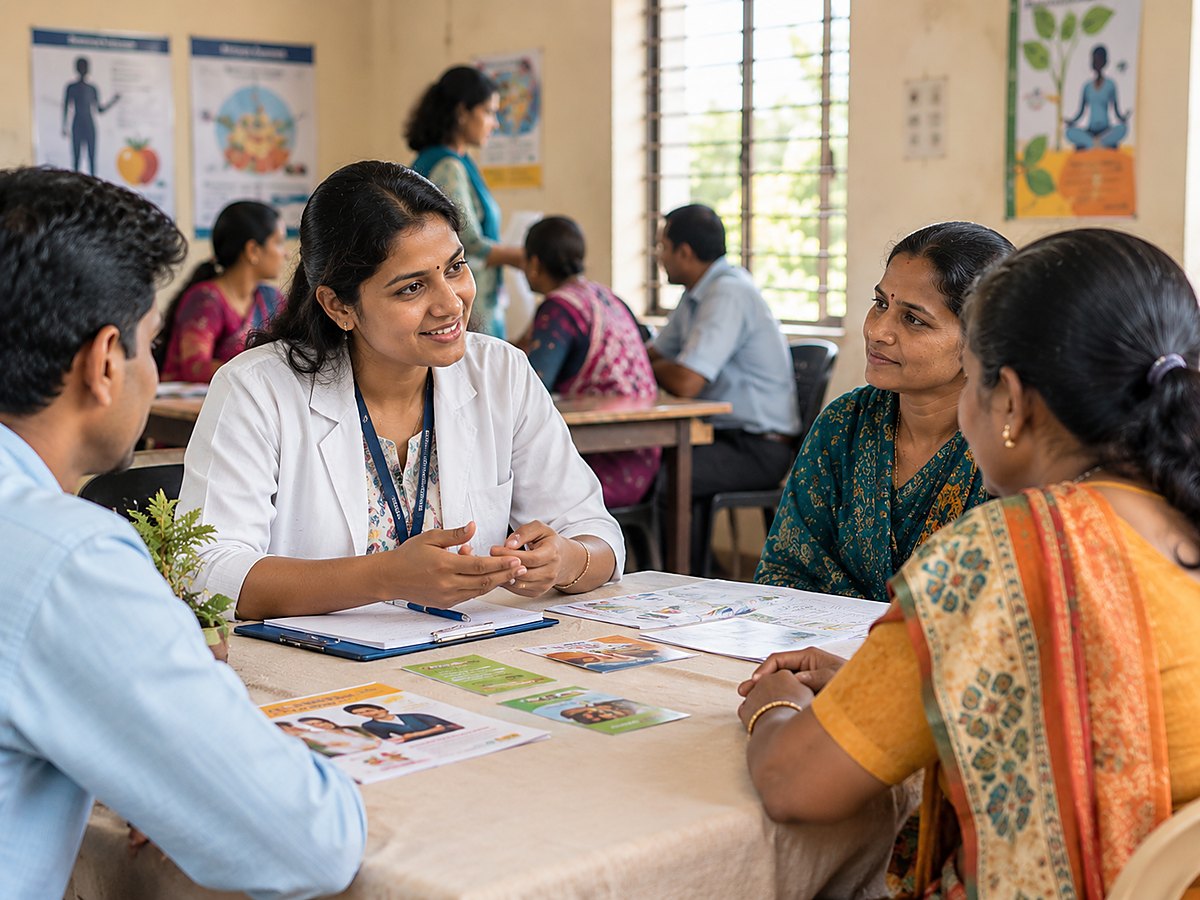
Photograph requiredA blood donation camp in progress, with the blood bank team and donors. Take consent from every person in the frame.Please read this first
Nityasevanexgenz Foundation acts only as a guide and facilitator for blood, organ and body donation. The final acceptance of any donation rests with the blood bank, transplant hospital or medical college concerned, under government rules and their own medical criteria. Nothing on this page is medical advice.
Blood donation
Blood donation camps
A voluntary organisation cannot collect blood on its own. Every camp we hold is run in partnership with a licensed government or private blood bank, whose doctors and technicians do the screening and the collection. The Foundation provides the venue, the volunteers, the publicity and the refreshments.
How a camp comes together
- Partnering with a blood bank. We write to a licensed blood bank in the area on the Foundation's letterhead and fix a date at least fifteen to twenty days in advance. A camp is announced on this website only after the blood bank's written consent.
- Choosing the venue. A school hall, community hall or office with good ventilation, light, clean water, and room for beds, tables and a waiting area.
- Spreading the word. Posters, pamphlets and social media, with a registration count shared with the blood bank so they bring enough staff, blood bags and medical kits.
- On the day. The blood bank team screens every donor — weight, haemoglobin, blood pressure and a short medical history — and collects blood only from those who pass. Our volunteers manage seating, registration and refreshments.
- Afterwards. The blood bank issues each donor a donor card or certificate. The Foundation adds its own letter of gratitude.
Who can donate
The blood bank's doctor makes the final decision on the day. In general, donors should be between 18 and 65 years of age, weigh at least 50 kg, have a normal haemoglobin level, and be free of fever, infection or recent surgery. Eat a proper meal and drink water before you come.
Upcoming camps
Licensed blood banks in Vasai-Virar and Palghar
These are the blood banks the Foundation approaches for camps. If you need blood urgently, or want to donate before our next camp, you can contact them directly.
| Blood bank | Address | Contact |
|---|---|---|
| Vijayee Blood Bank, Vasai West | First floor, Andrades Bhavan, Umela Phata Road, near Sai Service, Mulgaon, Vasai West. Open 24 hours. | +91 87930 99550 |
| Sarla Blood Bank, Vasai West | Veer Savarkar Nagar, Anand Nagar, Vasai West, near Ravi Fracture Hospital. | — |
| Maa Saraswati Blood Bank, Nalasopara | First floor, Saraswati Heights, above SBI Bank, Oswal Nagari, Nalasopara East. | +91 99847 71288 |
| Maharashtra Blood Bank, Palghar | Navli Phatak Court Road, Lokmanya Nagar, Vishnu Nagar, Palghar West. Serves rural and tribal Palghar. | +91 90495 22578 |
Organ donation
Pledging your organs after death
One person's organs can give new life to as many as eight or nine people, and sight to two more. Organ donation is governed entirely by the Government of India, and the pledge is made on its national portal, NOTTO — the National Organ and Tissue Transplant Organisation.
While you are alive
- Register on NOTTO. Fill in the online pledge form on the NOTTO portal, or on Maharashtra's ROTTO-SOTTO portal. It takes a few minutes.
- Keep your donor card. A digital organ donor card is issued on registration. Download it and keep it with you.
- Tell your family. This matters most. By law, no organ can be removed after death without the consent of the next of kin, whatever the pledge says. Make sure they know your wish.
What can be donated, and when
After a natural death at home or in hospital — a heart attack or old age, for instance — only the eyes and skin can be donated. The corneas must be retrieved within six hours. A registered eye bank sends a team to the home; the procedure takes ten to fifteen minutes.
After brain-stem death in a hospital — usually following an accident or a brain haemorrhage, with the heart kept beating on a ventilator — the heart, both kidneys, the liver, lungs, pancreas and intestines can all be donated. The hospital's transplant coordinator speaks to the family, and with their consent the organs go, free of charge, to the patients next on the NOTTO waiting list.
Make your pledge on the government portal
The Foundation does not hold an organ donation form of its own, and no voluntary organisation should. The pledge belongs on the national registry.
Eye donation after a death at home
Time is the whole difficulty: six hours. If a family member who wished to donate their eyes has died at home, call us straight away on +91 79729 92530 and we will connect you to the nearest eye bank.
INFORMATION STILL REQUIRED
The names and 24-hour numbers of the eye banks and transplant-registered hospitals nearest to Vasai-Virar and Palghar, so that they can be listed here and kept in the Foundation's own directory.
Body donation
Donating your body to a medical college
A body donated after death is the first teacher of every doctor. Medical students call it the silent teacher. Bodies are accepted only by the Anatomy Department of a recognised government or private medical college, and the Foundation helps families with the paperwork and the practical steps.
While you are alive
- The pledge form. The consent form comes from the Anatomy Department of the medical college. We keep copies at our office so that anyone who wishes to pledge can collect one from us.
- The family's consent. At least two close family members must sign the form as witnesses. Without the family's agreement, no college will accept a body after death.
- The donor card. Once the form is lodged, the college issues a body donor card. Keep it where your family can find it.
When the time comes
- Within three to six hours. The body must reach the medical college within this window. Given the traffic between Vasai-Virar and Mumbai, decide on the college in advance.
- The death certificate. A registered medical practitioner must certify the cause of death immediately. The college will not accept the body without it.
- Call the college at once. Telephone the Anatomy Department so that they are ready to receive the body.
- Transport. The Foundation helps the family arrange an ambulance or hearse to carry the body to the college with dignity.
When a body cannot be accepted
A medical college will not accept a body where the death was unnatural — an accident, suicide or homicide that becomes a police or post-mortem case — or where the person had HIV/AIDS, hepatitis B or C, gangrene or another serious infectious disease.
What happens to a donated body
The college treats the body with great respect. Before any study begins, every student and doctor takes the cadaveric oath, a formal expression of gratitude to the donor. The body is preserved with embalming chemicals so that it remains in good condition for months or years.
- Medical education. First-year MBBS and BDS students learn the structure of the human body — muscles, bones, vessels, heart, brain and organs — from it. One body typically teaches ten to fifteen students.
- Surgical training. Postgraduate surgeons practise complex procedures in neurosurgery, cardiac and orthopaedic surgery, and new techniques such as robotic surgery, before ever using them on a living patient.
- Research. Bodies of people who died of conditions such as Alzheimer's or cancer help researchers understand those diseases and search for new treatments.
When the study is complete, usually after one to two years, the college performs the last rites with full dignity, sometimes with the help of a social organisation. The body is not returned to the family.
Where to pledge
For Vasai-Virar and Palghar, the nearest option is the Government Medical College, Palghar. Families in Vasai-Virar also register with Lokmanya Tilak Municipal General Hospital (Sion Hospital) and Topiwala National Medical College and Nair Hospital in Mumbai.
INFORMATION STILL REQUIRED
Written permission from the Head of the Anatomy Department at the Government Medical College, Palghar, to host their pledge form on this website, and a scanned PDF of that form. Link the button above to the PDF once both are in hand.
Organ donation and body donation are not the same thing
People often confuse the two. This table sets out the difference. If you have pledged both, whatever is possible at the time of death is done first — typically eye donation at home, and then the body goes to the medical college.
| Organ donation | Body donation | |
|---|---|---|
| Purpose | To save the lives of patients who need a transplant, or give them sight. | To teach medical students and support scientific research. |
| When it is possible | After brain-stem death on a ventilator, all major organs. After a natural death, only the eyes and skin. | Only after a natural death. |
| What is given | Heart, kidneys, liver, lungs, pancreas, intestines, corneas and skin. | The whole body, with no organ removed. |
| Time limit | Major organs are retrieved in the ICU immediately after brain death is declared. Eyes and skin within three to six hours of death. | The body must reach the college within three to six hours of death. |
| Where | A registered transplant hospital. For eye donation at home, the eye bank's team comes to you. | The Anatomy Department of a recognised medical college. |
| Last rites | After the organs are retrieved, the body is returned to the family for their own last rites. | The college performs the last rites after one to two years. The body is not returned. |
| When it is not possible | Cancer or a body-wide infection such as sepsis rules out the major organs. | Accident, suicide, homicide or any post-mortem case, and serious infectious disease. |
Talk to us before you decide
Whether you want to organise a camp at your school, office or housing society, pledge your organs, or understand body donation for yourself or a parent, call us on +91 79729 92530 or write to nityasevanexgenzfoundation@gmail.com. We keep the pledge forms, the contact numbers and the patience.